
Time-Based Workouts
Set a timer (e.g., 30 seconds per exercise). Builds endurance & keeps heart rate up.
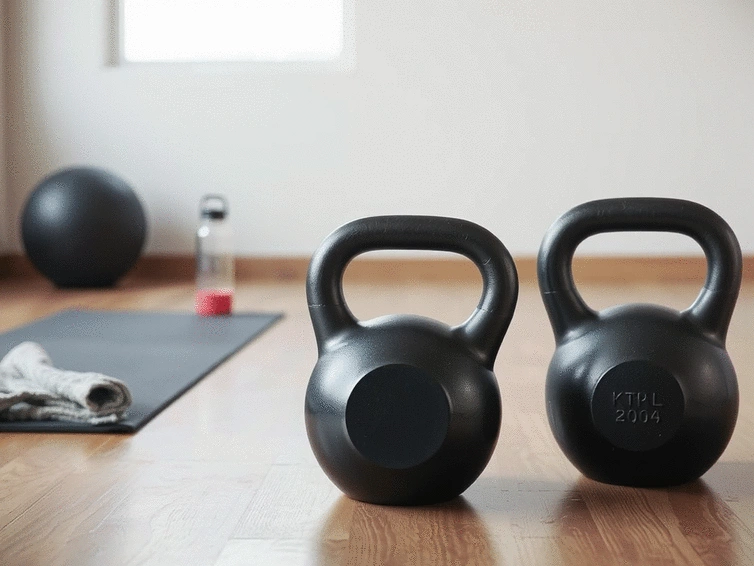
Ready to supercharge your kettlebell workouts? Incorporating advanced kettlebell circuits can transform your strength and conditioning, offering you an engaging way to elevate your fitness journey.
This visual outlines two primary approaches to structuring kettlebell workouts (time-based vs. repetition-based) and highlights essential exercises for maximum impact.
Set a timer (e.g., 30 seconds per exercise). Builds endurance & keeps heart rate up.
Aim for specific reps (e.g., 10-15). Focuses on strength & form.
Balanced approach for variety. E.g., time-based set + rep-based set.
Short bursts of intense exercise + brief rest periods for fat loss & aerobic capacity.
Are you ready to take your kettlebell training to the next level? Advanced kettlebell circuits are an excellent way to build strength while improving your overall conditioning. They challenge your muscles and enhance your cardiovascular fitness, making them a great addition to any workout regimen!
In this section, we will explore the pivotal role of kettlebells in total-body power development, who can benefit from these advanced workouts, and how kettlebell training connects to functional fitness. Let's dive in!
Kettlebells are unique tools that can help you develop total-body power. They engage multiple muscle groups and require coordination, balance, and core stability. This combination leads to improved strength and endurance, which is essential for any fitness journey. Research by the American Council on Exercise (ACE), for instance, highlights how kettlebell workouts can provide a powerful workout in a short amount of time.

By incorporating kettlebells into your routine, you’re not just lifting weights—you’re enhancing your entire body's functionality and strength in an enjoyable way!
Advanced kettlebell training is not just for seasoned athletes; it's accessible for anyone looking to elevate their fitness level! Whether you’re a beginner ready to challenge yourself or an experienced lifter seeking new methods, kettlebells can adapt to your needs. A study published in PMC (PubMed Central) further supports the broad applicability of kettlebell training across various demographics and fitness goals.
At Fitness Kettlebells, we believe that everyone deserves to experience the benefits of kettlebell training, regardless of their starting point.
Functional fitness focuses on exercises that help you perform daily activities more efficiently. Kettlebell training fits seamlessly into this category by mimicking natural movements such as lifting, carrying, and squatting. This training enhances your ability to perform these daily tasks with ease and confidence. Academic research, such as a thesis on the effects of kettlebell training on physical fitness in women, underscores its effectiveness in improving various fitness parameters relevant to daily life, as detailed in ScholarWorks@UARK.
Integrating kettlebell training into your routine will undeniably enhance your functional fitness, allowing you to move better both in and out of the gym!
What aspect of kettlebell training do you find most challenging or rewarding? Share your thoughts below:
Creating a kettlebell circuit that delivers maximum results requires thoughtful planning. At Fitness Kettlebells, I emphasize the importance of structuring your workouts to balance time and repetition. This ensures that you challenge your body while also allowing for adequate recovery. Let’s dive into how to design effective kettlebell circuits that will help you build strength and endurance!
When it comes to structuring your kettlebell workouts, you have two primary options: focusing on time or repetitions. Both methods have their advantages, and incorporating both can keep your training fresh.

The key is to listen to your body and adjust these structures based on your fitness level and goals. Remember, variety is the spice of life!
Incorporating a diverse range of exercises in your kettlebell circuit will not only keep you engaged but also ensure you’re hitting all major muscle groups effectively. Here are some essential movements to consider:
By incorporating these exercises into your circuit, you can ensure a comprehensive workout that promotes total-body strength and conditioning.
Focusing on compound movements like swings, cleans, and presses can significantly elevate your kettlebell circuit. These exercises engage multiple muscle groups, enhancing efficiency in your workouts. For instance, kettlebell swings not only work your hamstrings and glutes but also develop your cardiovascular endurance.
Don’t forget to include squats and lunges in your kettlebell circuit! These foundational exercises target key muscle groups such as your quads, glutes, and core. I always tell my clients to envision their body working as a cohesive unit—this helps with both strength and functional movement.
High-Intensity Interval Training (HIIT) can be a game-changer for your kettlebell routines. By incorporating short bursts of intense exercise followed by brief rest periods, you can maximize fat loss while improving your aerobic capacity.
This method not only keeps your workouts exciting but also accelerates results. So, are you ready to take your kettlebell training to the next level?
Here is a quick recap of the important points discussed in the article:
Kettlebell Programming Mistakes to Avoid
What if the key to unlocking your kettlebell potential lies in understanding programming? Many fitne
Progressing Your Kettlebell Form Safely

Have you ever hit a plateau in your training and felt stuck? Understanding how to progress effective
Kettlebell Routine for Strength and Mobility
Are you ready to transform your fitness journey with kettlebell training? The versatility of these w

Kettlebell Programming Mistakes to Avoid
Progressing Your Kettlebell Form Safely
Kettlebell Routine for Strength and Mobility
Kettlebell Equipment Selection Guide
Mastering the Hip Hinge Technique